This time, we still use the Micro-Nano Profile Detection System to detect surface scratches, and the objective lens used is the Mirau interference objective lens developed by us.
Scratches on lenses or other ultra-smooth surfaces are often very fine and can only be observed under high magnification. If the depth of scratches can be detected, it will help improve the process in production. Or how to evaluate and grade the impact of scratches of different depths on service life.
The figure below shows the white light interference detection fringes of the scratched area on the surface of the measured lens. The scratches cause protrusions and depressions in the interference fringes. The impact of scratches is not only that the scratch itself leaves a tiny groove, but also causes slight morphological changes on the scratched edges.
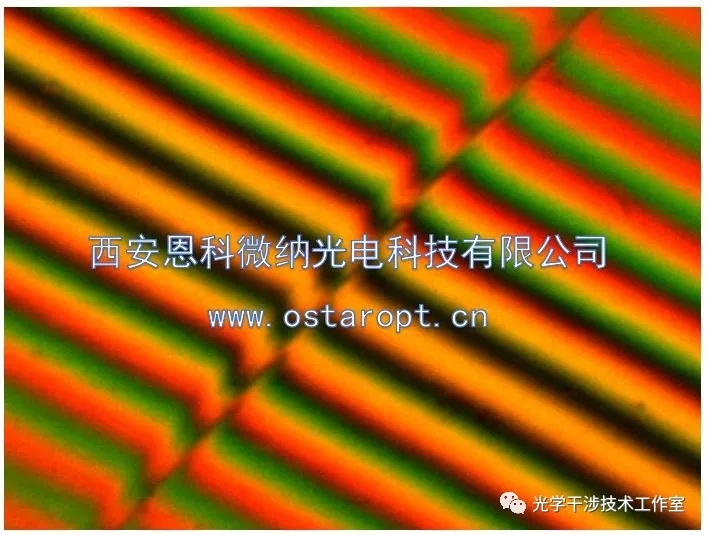
Interference fringes of the scratched area
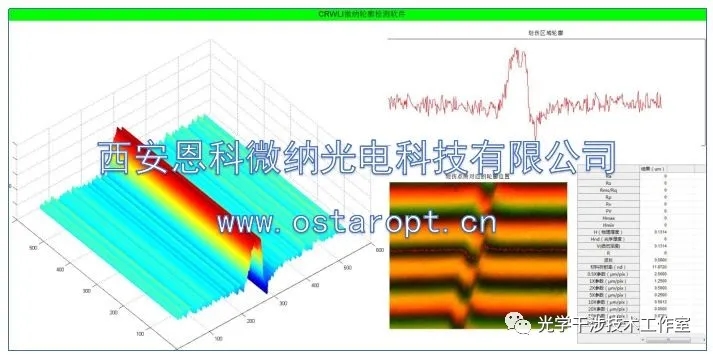
Software interface

Profile cross-section of the analysis area
From the profile cross-section of the scratched area, the protruding position is actually the depth of the scratch, which is exactly opposite to the direction shown in the figure. There is an obvious downward protrusion on the right side of the scratch, which is the morphological change of the scratch edge. This indicates that the scratch itself is not just a surface scratch, but also causes slight changes in the surrounding surface shape.
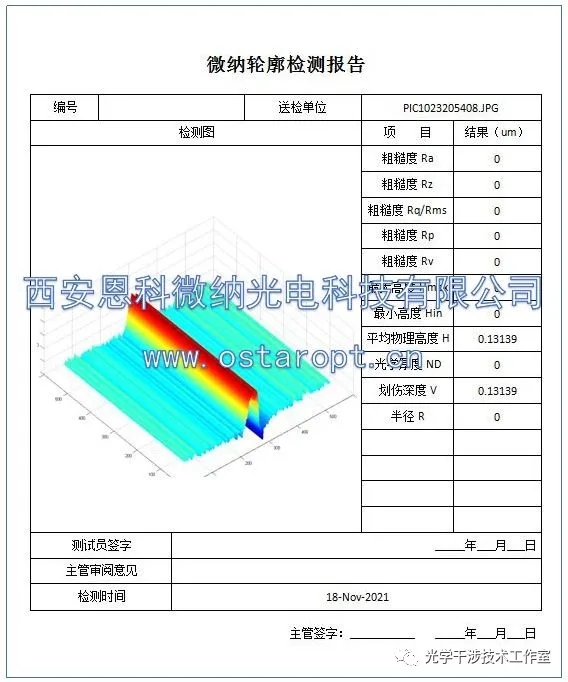
Depth detection report 1 of the scratched area
The depth caused by the profile change of the scratched area, i.e., the maximum profile change and the physical depth of the scratch. The software detection result is 0.13139um.
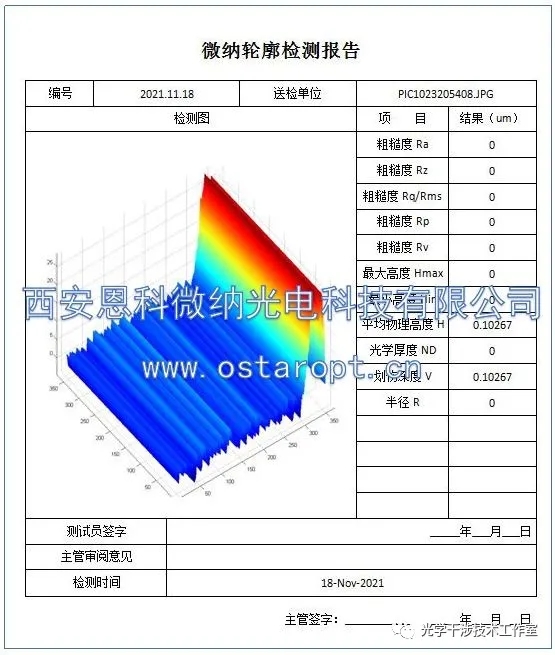
Scratch depth detection report 2
Scratch depth, based on the lens surface, the depth of the scratch is 0.10267um.
The slight profile change is 0.13139-0.10267um = 0.02872um, i.e., 28.72nm.









 QQ客服1
QQ客服1