Optical component processing, especially high-precision optical components, surface scratches; surface texture left by poor polishing; or micro-surface topography changes caused by internal stress of the material. Scratches and residual texture can be clearly judged by microscope or magnifying glass, but requirements such as the depth of the texture and the surface topography change caused by stress cannot be observed under a microscope.
Currently, the instrument we have developed can detect the depth of surface texture and the location of surface topography changes caused by stress. The instrument mainly uses the white light interferometry principle. It can be used for rapid inspection by visual observation alone, or with software functions to obtain three-dimensional topography and cross-sectional profile shape.
Main parameters of the instrument:
Objective lens: Linnik interference objective
Total magnification: 100x
Measurement range: 0.25mm diameter
Camera pixels: 3 million
Currently, an optical sample has been tested using this instrument, and the test images are attached.
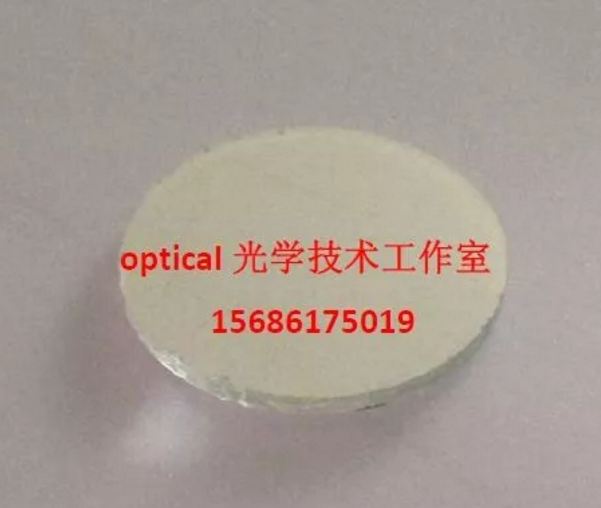
Optical lens under test
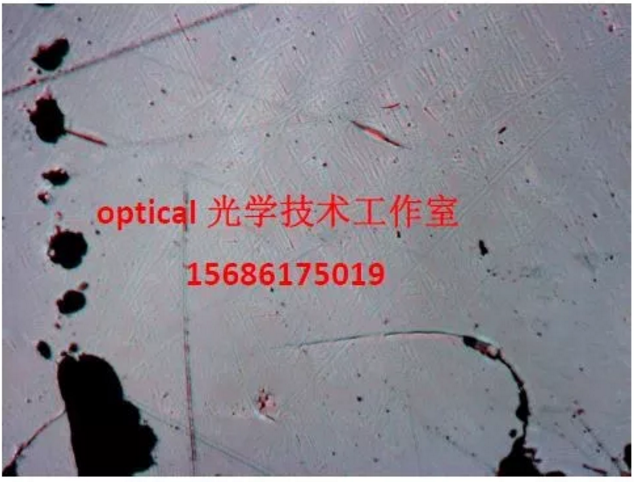
Damaged edge of the optical lens under a microscope
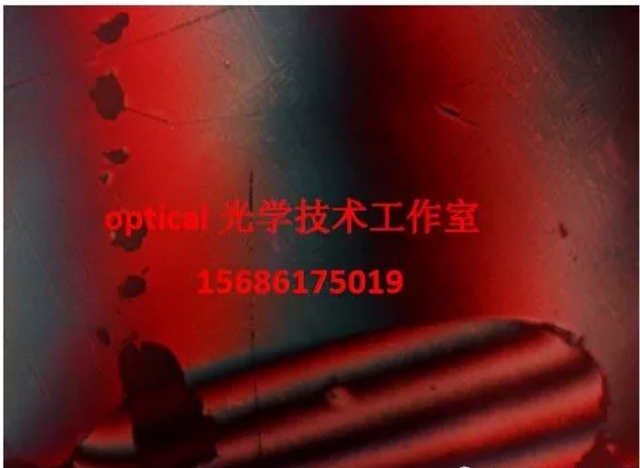
Interference fringes in the scratch area under the white light interferometer
3D surface topography analysis
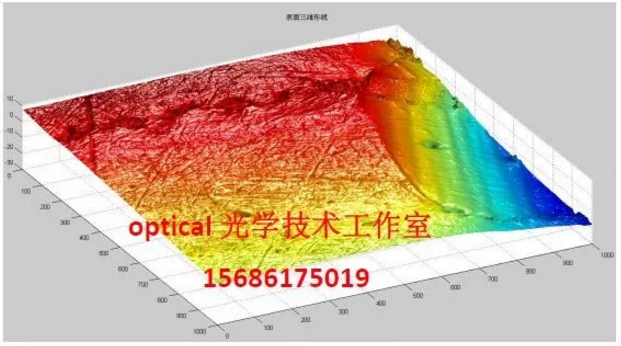
Through the analysis of white light interferometry inspection images, it can be seen that even though surface micro-scratches or cracks caused by impact on the lens surface can be seen under a microscope, the change in surface topography cannot be observed under a microscope.
By using a white light interferometer, it can be detected that the interference fringe directions on both sides of a scratch or crack are significantly different. This means that the planes on both sides are no longer on the same plane, but have a very slight tilt.
This slight tilt may be only a few nanometers, but for many critical components, the impact is indeed significant. The white light interferometer can detect such minor changes in surface topography.









 QQ客服1
QQ客服1