During the construction of a white light interference optical path, it often happens that interference fringes appear, but the sample image is not in the clearest state. Or the image is clear, but no interference fringes appear. This is commonly referred to as the interference fringes not coinciding with the image.
In fact, this is an incorrect expression. Interference fringes are the result of interference between the measurement light reflected from the sample surface and the reference light reflected from the reference mirror. It can be understood that the observed surface and the interference fringes are generated at the same position (though the statement is not entirely accurate), but the clear sample surface image and interference fringe image are not obtained at the imaging end.
Some teams or experimenters think that after adjusting the image to clarity, it would be good if the reference end of the objective could be adjusted. This idea seems to be considered the most reasonable solution by many teams researching white light interference.
So, is it possible to adjust the reference end of the interference objective to make both the image and the interference fringes clear? This depends on the practical engineering application. Take the Mirau interference objective as an example.
Regarding the white light interference phase-shifting component in engineering applications, if the entire white light interference optical path (including the imaging path and the interference objective) is phase-shifted, then in such applications, the reference mirror can be adjusted to make both the image and interference fringes clear.
If only the interference objective is phase-shifted, while the imaging path does not participate in the phase shift, it is not recommended to adjust the reference mirror in this type of application.
The reference mirror is a standard component of the interference objective, not only with high manufacturing precision but also with high installation positional accuracy.
So how to correctly analyze whether the constructed interference optical path needs to adjust the reference mirror of the interference objective? Follow the steps below.
First, determine whether the CCD target surface has been adjusted to the best imaging plane of the imaging tube. This is the key to infinite conjugate imaging optical paths.
If it is confirmed that the position of the CCD target surface has been properly adjusted, then install the interference objective and observe the sample surface. At this point, when the image is adjusted to its clearest, the interference fringes should also be clear. If the interference fringes deviate significantly from the clear image position, then the reference mirror position of the interference objective needs to be adjusted.
Generally, for interference objectives with a magnification less than 20X, the depth of field is relatively large, so reference mirror adjustment is usually unnecessary during use. However, for 50X or even 100X objectives, the depth of field is very small, so it is necessary to consider whether the reference mirror position needs adjustment.
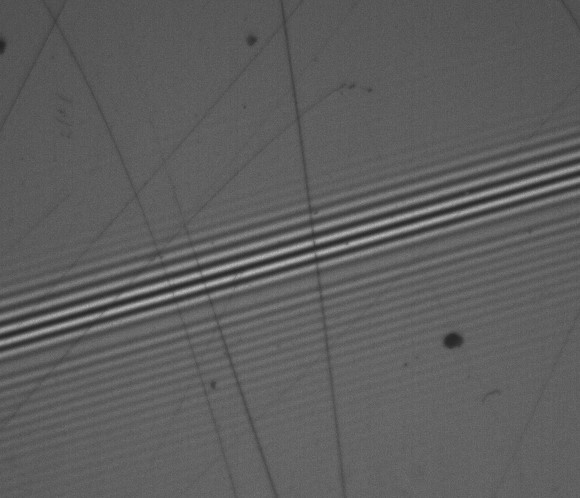
Both interference fringes and image are clear
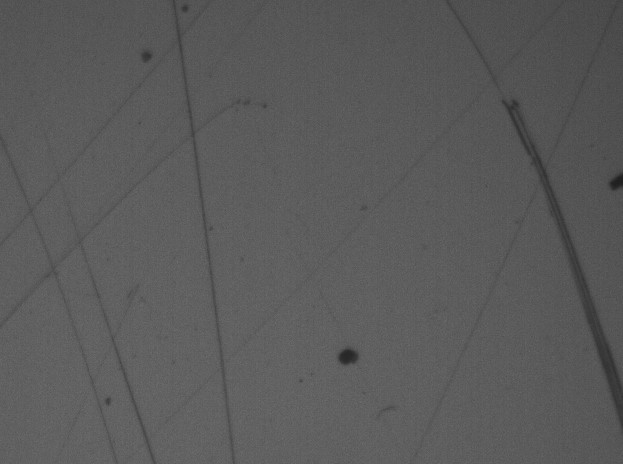
Image clear, interference fringes not present
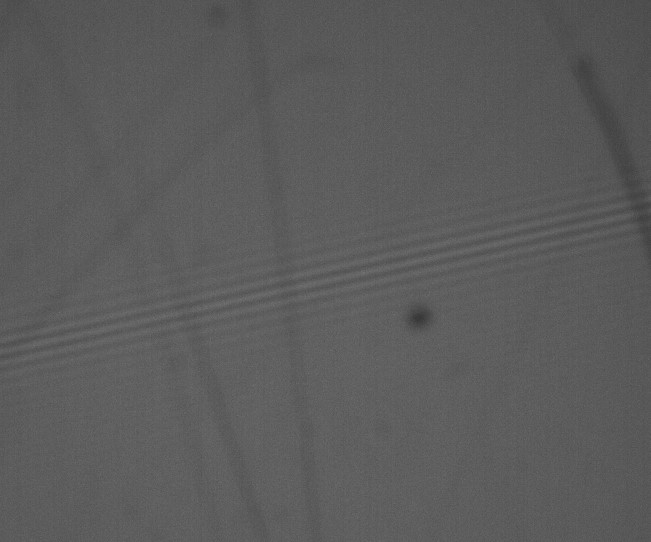
Both image and interference fringes present, but both unclear (not coincident)









 QQ客服1
QQ客服1