Bearing is an important component in contemporary mechanical equipment. Its main function is to support the mechanical rotating body, reduce the friction during its motion, and ensure its rotational accuracy.
The smaller the surface roughness of the ball, the smaller the friction during bearing motion, and the longer the service life of the bearing. In a broader sense, it can also help reduce equipment energy consumption and improve equipment operating efficiency.
How to measure the roughness of balls? The traditional method is to use a roughness tester. The stylus of a typical roughness tester moves linearly, which makes it easy to measure large-radius spheres. For small-diameter balls, using a roughness tester is very difficult. In addition, when measuring the roughness of a ball, the stylus needs to slide over the very top of the steel ball as much as possible, requiring multiple attempts.
Steel balls are classified by roughness grade as:
G3(Ra0.008);G5(Ra0.010);G10(Ra0.012);G16(Ra0.016);G20(Ra0.020);G28(Ra0.025);
G40(Ra0.040);G60(Ra0.050);G100(Ra0.125);G200(Ra0.20);G400(Ra0.32);G1000(Ra0.4);
Currently, we use the Micro-nano Profilometry System, combined with CRWLI Micro-nano Profile Analysis Software, to measure the roughness of tiny balls. Below is a measurement case.

The steel ball being measured
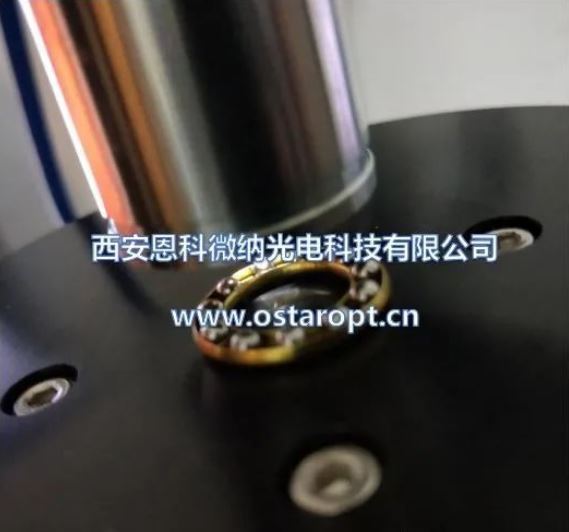
Mirau interference objective used in measurement

Interference fringes of the steel ball
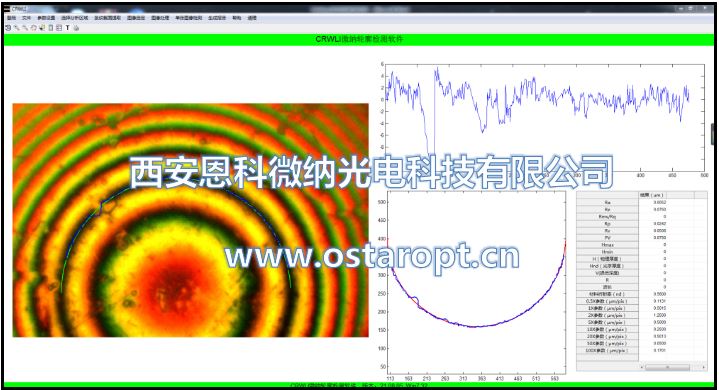
Software interface
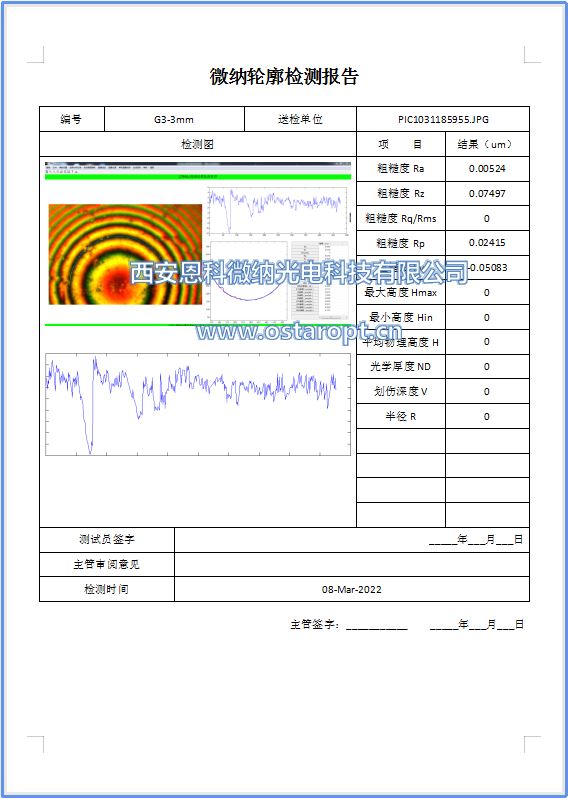
Measurement report
The measurement result shows Ra: 0.00524um, and the maximum surface roughness requirement for G3 steel balls is Ra=0.008um. The grade of the steel ball measured this time is G3.









 QQ客服1
QQ客服1